A call, a bench and a devastation I couldn't explain.

The call that fundamentally changed my career trajectory, at the time, felt like a level of disappointment I didn't even have words to explain. The realizations of it's impact could only come with time and understanding.
"Katie, I don't think you're happy in this role & I'd like you to find something that would better utilize your..."
Why Understanding Your Unique Energy Pattern Matters More Than Any Time Management Hack ever will.
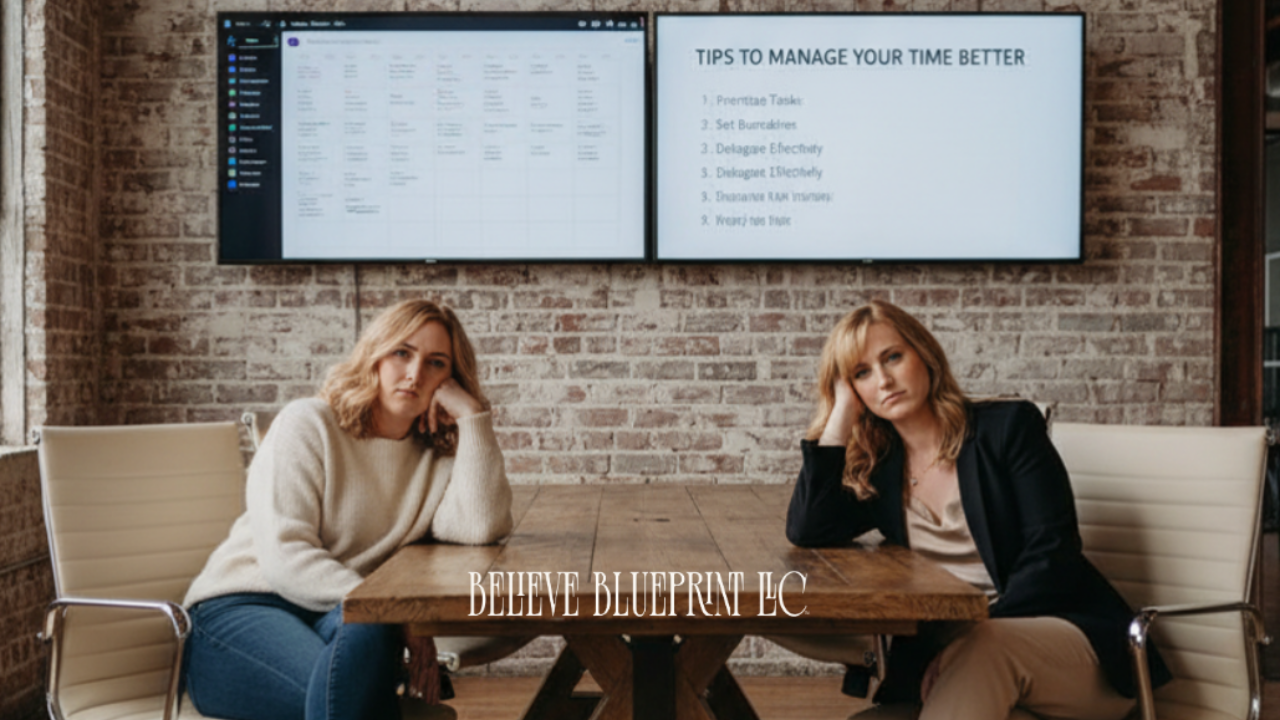
You've tried every productivity hack, calendar system, and time-blocking method out there, but you're still exhausted because you're working against how your energy is actually designed to be consumed.
Time management teaches you to force more into your day, while energy pattern awareness teaches you to work WITH your natural rhythms so you accomplish more while feeling less drained.
When you understand your unique energy pattern, you stop fighting yourself and start leveraging your design, which is why some people seem effortlessly productive while others burn out doing half as much.
You stop wondering "What's wrong with me?" and start understanding "This is how I'm designed."
Instead of copying what works for other leaders, discovering your unique energy pattern and communication style, allows you to lead authentically without burning out.
You finally break the cycle of recreating the same exhaustion patterns at every job, every role, every "fresh start" because you understand the roo...
You just returned and realize that your "vacation" was actually just burnout with a cute cabana attendant and a fruity umbrella drink.
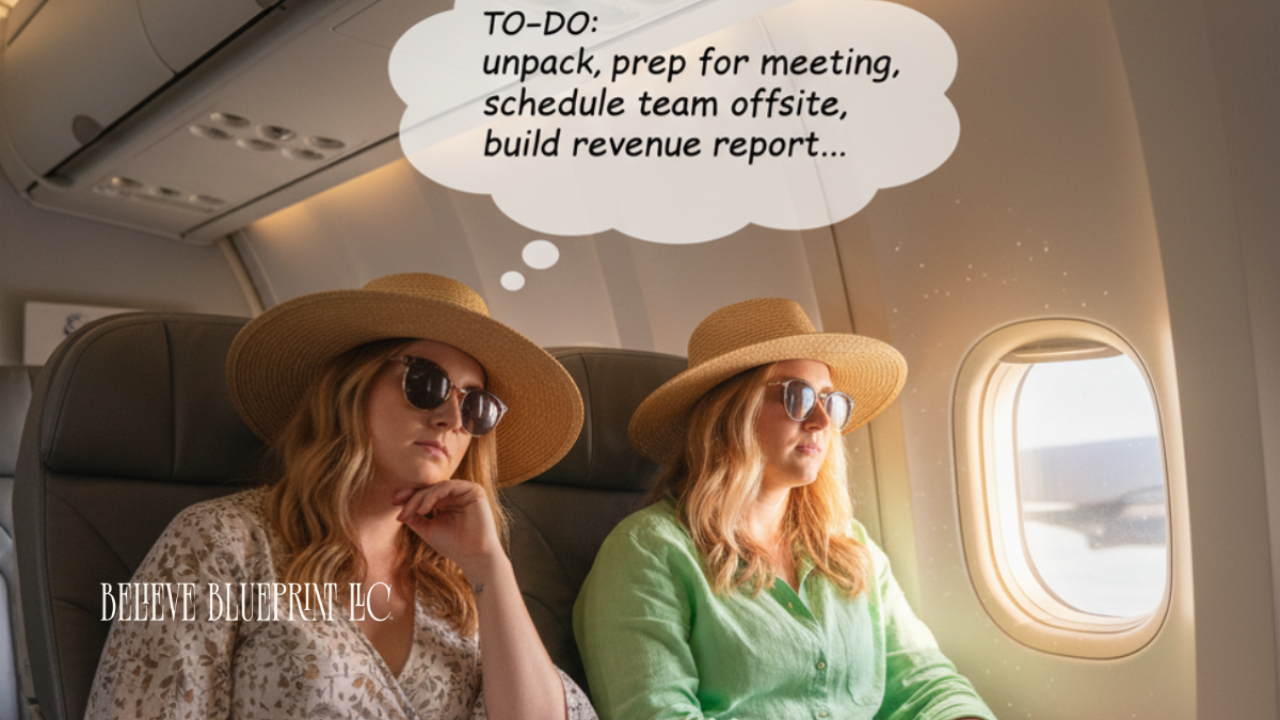
You are split between feeling refreshed, happy you made wonderful memories and dreading the work chaos you are about to walk into, knowing that everyone saved all their "let's circle back on that" for when you got back. It's all still waiting for you, it was just tabled until you got back.
You spent your time off managing everyone else's good time and came back needing more time off from your time off. And now you realize the break just highlighted how exhausting your normal pace really is.
Fine, we'll say it: That wasn't a vacation, that was functional burnout with sand between it's toes.
You coordinated everyone's itinerary, made sure the kids had sunscreen AND still fielded a few "quick" work calls between poolside margaritas.
Meanwhile, everyone else actually relaxed. Weird how that works.
Here's what nobody tells high-capacity leaders: Taking time off doesn't fix the thing that makes you exhausted. It just gives you a clearer view of how you've designed your life around everyone else...
Is your “self-care routine” just burnout with better branding?
You use PTO to finally get some much needed self care. You plan based on recommendations from friends, influencers & your Aunt who went to the most amazing spa ever.
But you come back wondering why you feel even worse. We hate to tell you, you’re suffering from recovery mismatch.
We have done it all… meditation, take a bath, rest. All amazing advice, for some, but terrible for others. The problem with the self care advice out there right now is it assumes everyone recharges the same way.
Somewhere along the way, time to recharge turned into doing what worked for a yoga influencer on a Tuesday. You realize your self-care routine is just socially acceptable burnout, in a matching athleisure set.
The typical advice out there negates that everyone has a different energy style & recharging for one will completely drain another.
For sustained energy: 37% of the population
You were told: Sit still, meditate, slow down.
That will drain you because your energy is meant to move. Forcing ...
You don’t have burnout, you have a high tolerance for self-abandonment. Sunday Scaries edition
If you’re still delivering, still leading, still the one everyone depends on, you’re probably not burned out. You’ve just gotten really good at overriding yourself.
Burnout shuts you down.
But you’re still performing, producing & making it all look very under control.
Which is exactly why no one sees it, including you, most of the time.
Until Sunday around 4pm.
The vibe quietly shifts from relaxing weekend to low-grade panic with a side of calendar review.
You start running your to-do list like it’s a slot machine:
- Everything you need to do
- Everything you might have missed
- Everything that will fall behind, if you don’t get ahead of it now
So, of course, you open your laptop as you whisper under your breath, “It’s ok, it’ll just be a quick check.” Famous last words
And just like that… Sunday becomes Monday’s unpaid opening act.
Here’s the part that really messes with you:
It feels like burnout, but it doesn’t look like it.
- You’re not checked out, ...
Confessions of a recovering micromanager
Micromanagement is like turning your team into marionettes. You control every move & wonder why no one can think without you.
Micromanagement isn’t a leadership skill, it’s control dressed up in a “just being helpful” costume. Unfortunately, no one on your team is buying it.
Micromanagement doesn’t improve performance, it creates 5 different types of frustration & 10x more work for you.
Most micromanagers are completely burned out & don’t realize they gave themselves the extra work.
The math: 1 leader, 10 team members, “just checking in” for another quick follow-up… for the 3rd time today.
You think you’re being helpful, but your team is having 5 completely different experiences:
-One feels controlled & immediately pulls back. The more you check in, the less they tell you.
-One is now waiting for direction because you’ve trained them not to trust themselves. They WERE productive, until every step started getting questioned.
-One mentally checked out because autonomy just left the building....
Your team meeting feels less like collaboration and more like a 7th grade dance. Half the room is talking, the other half is standing on the sidelines waiting to be asked.
You had a solid agenda and walked in expecting thoughtful, aligned input, but according to statistics here is what you got:
- Three are mentally already trying to combine agenda items to be more efficient
- One needs time to process and hates being put on the spot
- Two are shooting down your ideas before you even finish the question
- Three are waiting to respond to something, so they sit in silence, and you take it as agreement
- One whose energy left the building 3 meetings ago
And everyone thinking: “this could’ve been an email”
So what actually happened?
- The most openly opinionated answered first, if it was the most valuable insight or not. The quick thinkers are running the show
- The ones who need to process went internal, and so did their ideas. The deep thinkers have better ideas but you’ll hear about them 2 days from now in an off the cuff comment
- The polite ones waited for a gap that never came, neither did their input
- And someone was aggressively nodding while fully dis...
People are out there getting paid to test the thrill factor of water slides and your biggest thrill today was your 4pm meeting ending early.
Yes, according to payscale.com, professional water slide tester is an actual job you can get paid for.
Let that sink in for a second.
Someone’s entire resume is: Jump. Slide. Splash. Repeat.
No back-to-back meetings, no “quick syncs”, no mental overload from 17 open tabs and 187 unread emails by 10:09am.
Meanwhile…
You’ve got:
- 9:00am Forecast update call
- 9:30am 1:1 with your team member, because that was the only time THEY had available this week
- 10:00am the hopeful 15 minute buffer you had blocked off to grab coffee, just turned into a full decision discussion that somehow needs your full attention… that started with the innocent “do you have a quick sec”
And you’re toggling between all of them like it’s a competitive sport.
Here’s the wild part, You’re still making it all work, AND making it look seamless to everyone else.
- Camera on in video meetings.
- Notes taken, that everyone asks to reference later, because you’re “so thorough”.
- Decisions made, on the fly l...
Your calendar is fully booked, color-coded, AND completely ignoring the fact that you’re an actual human.

It looks impressive.
Everything has a place, a time and is accounted for like Marie Kondo found joy in it.
Everything has space, EXCEPT you.
Somewhere between 9am and 4:30pm you’ve gone "missing".
Probably hiding in the corner conference room, pretending like you’re on a call, just to get a second on your own and wondering how this became your normal.
You’re running a perfectly organized system that quietly drains you all day… like a polite vampire that only takes a little at a time.
But hey, at least it’s color-coded. Purple for meetings, green for calls, red for moments of existential dread.
Here’s the part people skip in the productivity manual:
Even a color-coded, “perfect” calendar can suck the energy out of you by 2pm. Everyone has those whirlwind days, but when the rinse-and-repeat of frantic normal starts feeling like a marathon you never signed up for, it’s time to pay attention to how your energy works.
And this usually happens because:
...
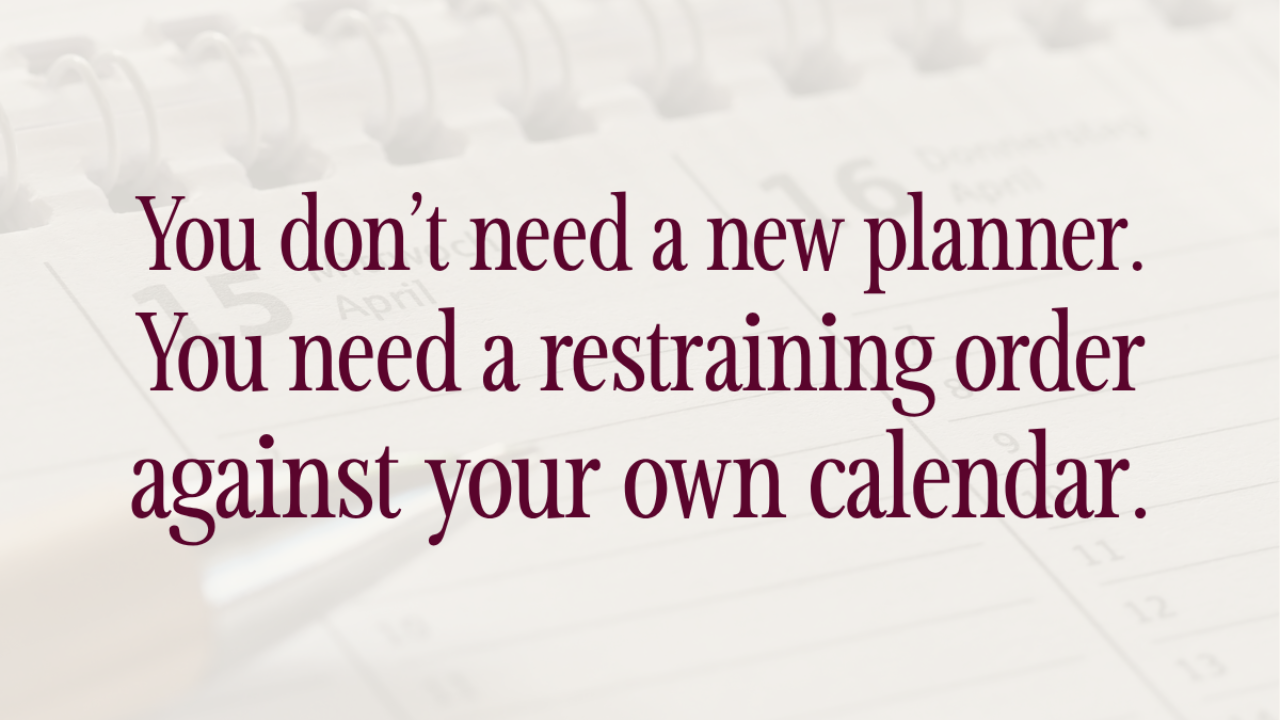
You don’t need a new planner. You need a restraining order against your own calendar.
At this point… your schedule has a level of access to you that feels legally questionable.
- Back-to-back calls, meetings or networking lunches
- “Quick” meetings that somehow require emotional recovery time
- Calendar blocks that looked reasonable… back when you had hope
And somehow… you keep making it work.
Of course you do... you ALWAYS do.
That’s kind of the problem.
Let’s be honest…
You didn’t build a schedule.
You built a system that assumes you’re a fully charged robot, with unlimited energy and zero human needs.
No breaks, no buffer.
No margin for being… a person.
And now?
You’re not leading your calendar.
You’re managing it like it’s a high-maintenance employee that refuses to respect boundaries.
That’s not a time problem, it's a capacity one.
And it’s happening because:
- You’ve continuously been rewarded for always saying yes
- You adjust faster than you reassess
- No one’s recalibrated your workload… including you
So the calendar just keeps ex...
TAKE THE FREE QUIZ
You don’t feel broken.
You feel… off.
Like you’re pushing upstream. Like you’re always “on.” Like success came with a quiet cost. That’s not failure. That’s what happens when your life doesn’t match how you’re built.
Take the quiz to find out what's out of alignment.

FIND YOUR LEADERSHIP EXPANSION STYLE?
GET YOUR CUSTOMIZED EXPANSION GUIDE BELOW
REGISTER FOR YOUR LEADERSHIP EXPANSION SESSION
YOU DON'T NEED PERMISSION, YOU NEED PROOF & WE HAVE IT
Find More Believe Blueprint Blog Posts:
Follow us on Substack for posts and articles